Skyscraper Live: Alex Honnold, Taipei 101, and What Fear Teaches Us
1 February 2026
How I Found Out
My dad drove me to the airport earlier this week. On the way, he told me about a show he was watching online. A man climbing Taipei 101 with bare hands. No ropes. No harness. No protection.
Sharing what he finds online is one of the few bonding activities we have. We rarely talk about his past or his feelings. Mostly I listen to him share politics. So when he got excited about this show, it meant something to me.
I think part of it is because we were there. Our family visited Taipei 101 together. We stood at the base, looked up, and took photos like every other tourist. That shared memory turned his excitement into something we all felt.
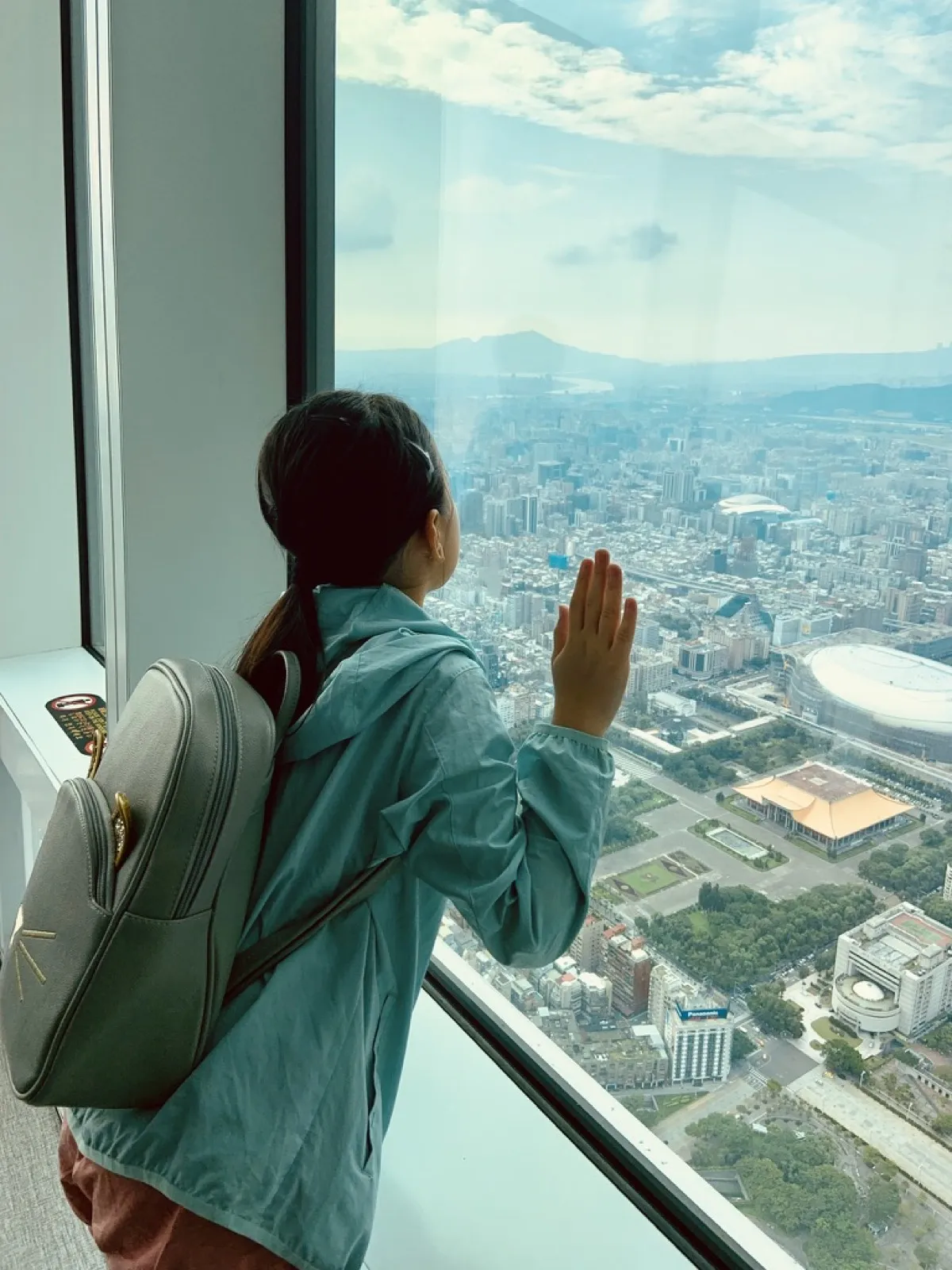
After hearing from him, I started seeing it everywhere. X posts. Commentaries. Reactions. The algorithm picked up what my dad had already found. Eventually on Friday evening, alone in a hotel room, I sat down and watched.
What Alex Did
That man was Alex Honnold. The show was Netflix’s Skyscraper Live.

Alex Honnold free-soloed Taipei 101. That means climbing bare-handed, no ropes, no safety gear. The building stands at 1,667 feet with 101 floors. He completed the climb in 1 hour, 31 minutes, and 34 seconds.
This is solo climbing at its most extreme. Mountains and buildings, bare hands, nothing between you and the ground. It is an athlete’s once-in-a-lifetime journey. No room for error. You succeed or you die.
This isn’t about adrenaline. It’s about the ultimate asymmetric risk management. When the margin for error is literally zero, your “due diligence” isn’t a checklist — it’s your survival instinct refined into a science.
The hardest section was the 64 floors of “bamboo boxes” — the segments that give Taipei 101 its signature look. Eight segments, eight floors each, with steep overhangs. Between segments, small balconies where he could rest for a few seconds.
Netflix broadcast the climb on a 10-second delay. If Alex fell, they would cut the feed before viewers saw it. That detail alone tells you the stakes.
He didn’t fall. He smiled, waved at people watching from inside the building, and talked through a live mic the whole way up.
Find Your Unique Strength
What struck me most was the gap between perception and reality. For the rest of us, climbing a skyscraper without ropes is unthinkable. For Alex, it looked effortless. Not easy — effortless. There is a difference.
That gap is where unique strength lives. What seems like mission impossible for others but feels natural for you — that is your edge. Alex found his early. He started climbing at age 11 and realized he had an unusual tolerance for exposure and risk. His amygdala, the part of the brain that processes fear, shows reduced activation compared to most people. He was born with a head start.
But finding the talent was only half the story. He chose to maximize it. He built his entire life around it. He turned a natural gift into a world-class skill.
The lesson is not “be like Alex.” The lesson is: pay attention to what comes easy to you but hard to others. That asymmetry is a signal. Most people ignore it because easy feels unimpressive. It is the opposite. Easy is where your leverage is.
How to Train
Alex didn’t just climb more. He trained with purpose. Muscle strength. Endurance. Mobility. Control. Years of dedicated, specific preparation for specific challenges.
Time alone is not enough. The “how” matters more than the “how long.” How to make the body learn. How to build patterns that hold under pressure.
This reminds me of how we work with AI. We don’t just give it more data or more time. We design the training. We shape the learning process. The parallel runs deeper than it first appears.
Maybe our mind is separate from our body in a meaningful way. Our body is our physical agent — something to be directed and controlled. Sometimes it does things instantly, on autopilot. Muscle memory kicks in and we act without thinking. Other times, the body needs to unlearn old patterns and relearn new ones.
I know this firsthand. In rehab right now, I am relearning movement patterns that my body had wrong for decades. It is slow. It is frustrating. The mind knows what it wants. The body resists. Then one day, something clicks and the new pattern feels natural. The body learned.
Training Alex’s body to climb overhangs for hours is the same process at a different scale. Purposeful repetition. Feedback loops. When soloing, there are no slips or hesitation. Every movement had to be intentionally practiced and executed.
Fear Is a Feature, Not a Bug
Acrophobia (from Greek ákron “peak” and phóbos “fear”) is the clinical term for an extreme fear of heights. It affects 3–6% of people. A normal degree of caution around heights is universal and evolutionary — acrophobia is when that built-in warning system goes into overdrive.
Fear of heights is built into our DNA. It is not a flaw. It is a feature. It protected our species through millions of years of evolution. The ones who felt no fear near cliffs didn’t survive long enough to reproduce. We are descendants of the careful ones.
How does Alex face fear? In the show, Alex shared how he managed the situation when he was scared when soloing.
The best way to handle the scary moments, is to think rationally about the situation you are in, try to take a deep breath, and compose yourself, and try to make the best decision.
Pause. Assess. Decide. That’s it. No secret technique. No mystical mental state. Just a pause, an assessment, and a decision. So simple, and so applicable in everyday life.
I put this into practice today, during a business trip in Germany. I had planned to drive two hours to Trier to meet a friend’s family for lunch on Sunday. At the hotel parking garage, I found my rental car with a punctured tire. Not dangerous — the car was parked in the garage, not on the side of the autobahn. I paused. Assessed. Found the roadside assistance number. Managed to get the car towed in about 1.5 hours. Lunch was canceled, but I stayed safe. Quite an experience.
The same pattern applies to lower-stake fears too. Fear of public speaking. Fear of confrontation. Fear of admitting you were wrong. These fears are features. One trick I picked up somewhere: pretend to be nervous. Not to hide the fear. To redirect the mind. When you actively pretend to feel nervous, your brain shifts from experiencing the fear to performing the fear. The real anxiety loses its grip because your attention moves to the act of pretending. It sounds absurd. It works.
This connects to something in AI that bothers people: hallucination. Large language models generate probabilistic outputs. They sometimes produce confident-sounding nonsense. Everyone treats this as a bug to be fixed with grounding and guardrails.
But what if hallucination is also a feature? The same probabilistic nature that causes hallucination also enables creativity, analogy, and unexpected connections. You cannot have one without the other. Strip away all the randomness and you get a lookup table, not intelligence.
Maybe instead of fighting it, we should learn to work with it. I wonder what happens if you prompt: “pretend that you are hallucinating.” Would that redirect the model the way pretending to be nervous redirects a human brain? Probably not in the same way. But the principle — that features and bugs are often the same mechanism viewed from different angles — feels right.
A Strong Core
Watching Alex reach the top of Taipei 101, I kept coming back to one idea: the main reason he succeeded is having a strong core. Both physically and mentally.
His physical core controls every bodily movement with maximum efficiency and precision. Each grip, each shift of weight, each reach for the next hold — all governed by a core trained to the point of unconscious mastery.
His mental core keeps him calm and logical under any situation and distraction. 500 meters up, wind pushing, cameras rolling, millions watching live — and he smiled. He waved. He chatted through a microphone. That is core stability of a different kind.
This isn’t about adrenaline. It’s about the ultimate peace and trust in everything around you. When you have a strong enough core, the impossible becomes manageable.
Coincidentally, the building itself has a strong core too.
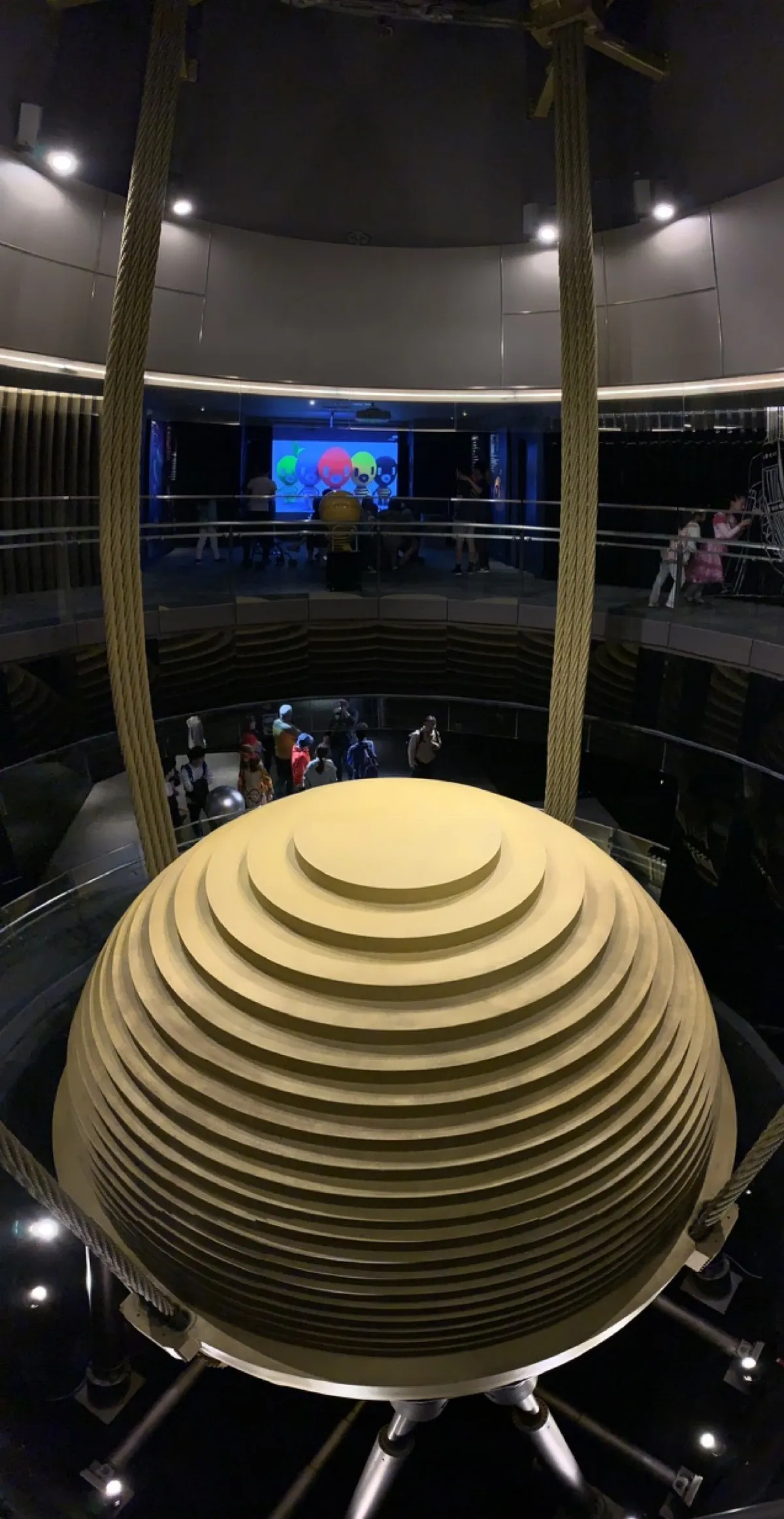
Taipei 101 houses a 730-ton tuned mass damper — a giant gold sphere suspended from the 92nd to the 88th floor. It acts as a pendulum, swaying to counteract the building’s movement during typhoons and earthquakes. It can reduce up to 40% of the tower’s sway. Most skyscrapers hide their dampers. Taipei 101 put it on display. Visitors can see it from the observation deck. It even has its own mascot: the “Damper Baby.”
Standing at the Base
My dad shared a video. I watched a show. We talked about it for a few minutes in the car. That is not much. But for us, it is something.